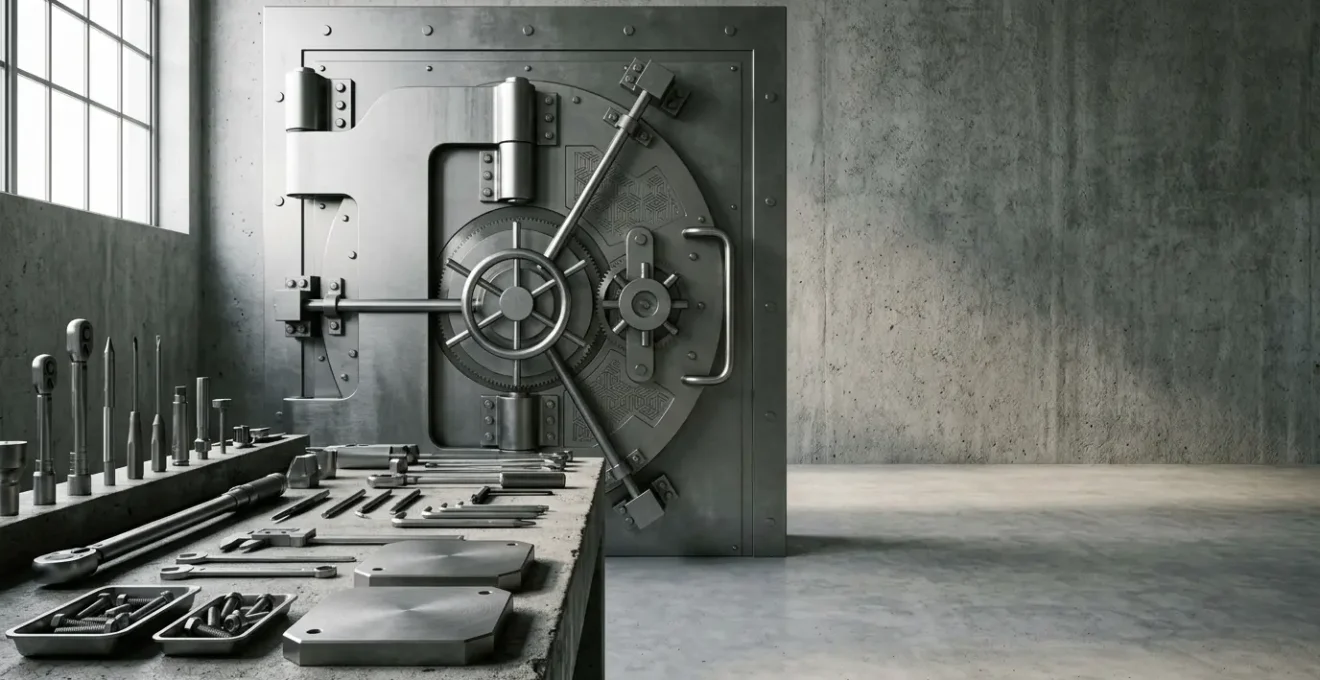
Protecting your crypto seed phrase requires treating it not as a password, but as a priceless physical bearer asset demanding an institutional-grade security plan.
- Standard paper guarantees eventual loss to environmental decay or disaster; engraved titanium offers near-permanent resilience.
- Physical security must account for both environmental hazards (fire, flood) and human threats (coercion, supply-chain attacks).
Recommendation: Adopt a multi-layered, adversarial mindset that combines robust materials, geographic distribution, and rigorous hardware verification to create a truly resilient self-custody system.
For any serious crypto investor, the 24 words of a seed phrase represent the ultimate key to their wealth. Yet, the standard advice for securing this key—writing it on a piece of paper and hiding it—is fundamentally flawed. This approach treats a digital asset with the security of a forgotten shopping list. While the intention to keep it offline is correct, the method ignores the physical realities of the world. Paper burns, ink fades, water destroys, and a single point of failure is a catastrophe waiting to happen.
The conversation must evolve beyond the simple digital vs. physical dichotomy. Storing your keys on a hardware wallet is a crucial first step, but it doesn’t solve the core vulnerability: the physical backup of the seed phrase itself. True security lies in adopting an adversarial mindset. You must assume that your physical asset will be targeted by specific attack vectors: environmental failure (fire, flood), coercive attacks (theft, duress), and supply-chain compromises (tampered devices).
This isn’t about paranoia; it’s about professional risk management. Protecting significant wealth demands treating your seed phrase as a physical bearer asset, equivalent to a gold bar or a bearer bond. Its security depends entirely on its physical integrity and the protocols surrounding its access. A simple piece of paper is not a protocol; it’s a liability.
This guide will walk you through the operational security principles of a physical asset consultant. We will dissect the failure points of common storage methods and construct a multi-layered defense system designed to withstand real-world threats, ensuring your digital wealth remains secure for generations.
This article details the professional-grade strategies required to secure your crypto assets against sophisticated physical threats. Explore the sections below to build your comprehensive security plan.
Summary: How to Protect Your Physical Crypto Seed Phrases From Fire, Floods, and Theft?
- Why Storing Your Crypto Wealth on Standard Paper Guarantees Eventual Destruction?
- How to Stamp Your 24-Word Seed Phrase Onto a Titanium Plate for Permanent Storage?
- Biometric Wallets vs PIN Devices: Which Physical Encryption Standard Is Harder to Crack?
- The Second-Hand Hardware Trap That Pre-Installs Malware on Your Financial Devices
- When Should You Distribute Your Seed Phrase Plates Across Multiple Geographic Locations?
- The Digital Seed Phrase Mistake That Allows Hackers to Drain Your Cold Wallet Instantly
- When Exactly Should You Establish a Formal Trust to Lock Away Your Family Assets?
- How to Bulletproof Your Crypto Portfolio Using Cold Storage Hardware Wallets?
Why Storing Your Crypto Wealth on Standard Paper Guarantees Eventual Destruction?
The primary reason investors are told to write down their seed phrase is to create an « air gap » from the internet, where most threats reside. While well-intentioned, relying on standard paper introduces an entirely new set of vulnerabilities rooted in the physical world. Paper is one of the least durable materials imaginable, making it a catastrophic single point of failure for what could be generational wealth. It is susceptible to a host of common, and often unavoidable, environmental threats.
Fire is the most obvious and devastating risk. A typical house fire can easily reach temperatures that will instantly incinerate any paper document, leaving no trace of your keys. Similarly, floods, burst pipes, or even high humidity can render ink unreadable and cause the paper to disintegrate. Over time, the very environment of a « safe » storage location can become hostile. Ink can fade due to light exposure, and the paper itself will degrade, becoming brittle and fragile.
A Bitcoin Magazine security researcher summarized the issue succinctly:
Paper is flammable: it degrades.
– Bitcoin Magazine security researcher, The Infosec Basics: How To Keep Your Bitcoin Seed Phrase Secure
Beyond environmental failure, paper offers zero resistance to casual discovery or theft. It cannot be secured in a way that provides evidence of tampering. A thief can photograph it and replace it without your knowledge. Treating your seed phrase like a sensitive document is insufficient; you must treat it like an irreplaceable physical asset. The fragility of paper makes it an unacceptable medium for storing any significant value, guaranteeing that over a long enough timeline, it will fail.
How to Stamp Your 24-Word Seed Phrase Onto a Titanium Plate for Permanent Storage?
To counter the certainty of paper’s decay, the security standard for physical seed phrase backup has moved to industrial-grade metals. Among these, titanium stands out as the superior choice for long-term, disaster-proof storage. Its properties far exceed the demands of most conceivable environmental catastrophes, including house fires and corrosion.
The key metric is the melting point. While a house fire can reach temperatures around 1500°F (815°C), this is hot enough to melt or deform lesser metals like aluminum. Even high-grade stainless steel, while robust, has a lower melting point than titanium. Grade 2 Titanium melts at 3034°F (1668°C), providing a massive safety margin that ensures your seed phrase survives even an intense blaze. Its corrosion resistance is also superior, protecting it from water, salt, and acids.
This comparison highlights the clear advantage of choosing a material based on its ability to withstand extreme conditions.
| Material | Melting Point | Fire Resistance | Corrosion Resistance |
|---|---|---|---|
| Aluminum | 1221°F (660°C) | Low | Moderate |
| 316L Stainless Steel | 2550°F (1400°C) | High | High |
| Grade 2 Titanium | 3034°F (1668°C) | Extreme | Superior |
| Average House Fire | 1500°F (815°C) | — | — |
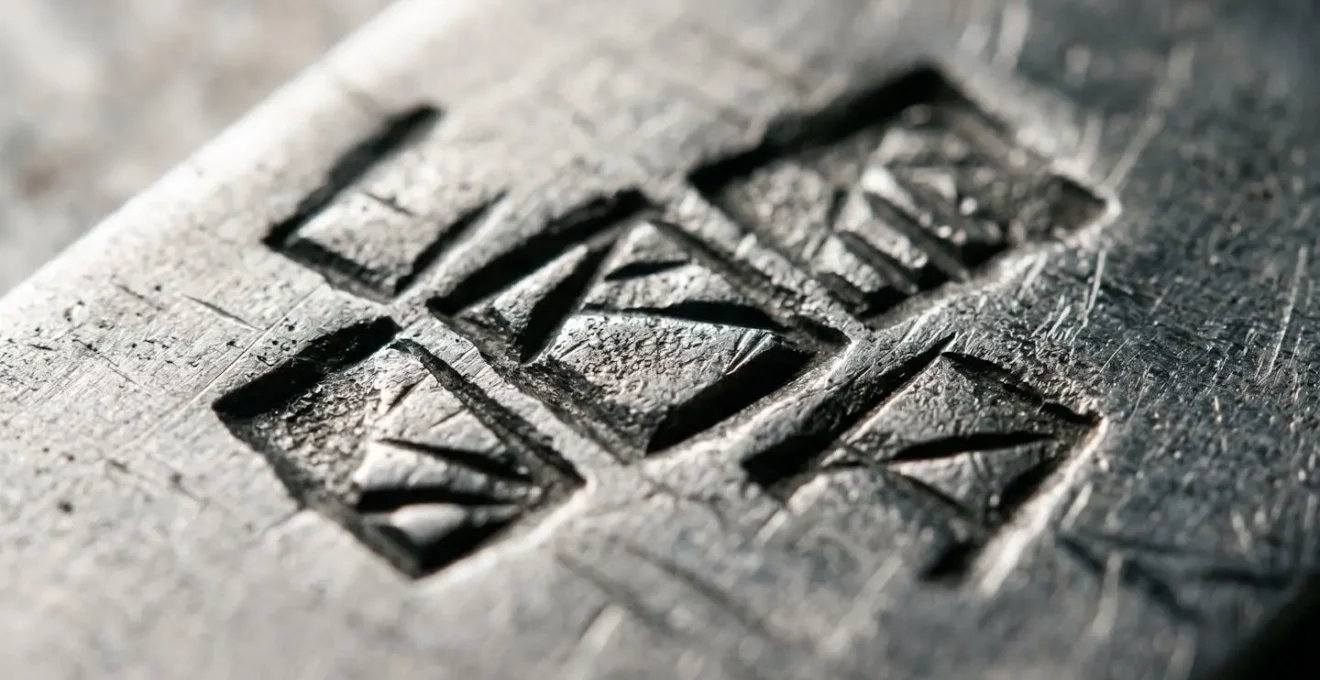
However, the material is only half the solution. The process of engraving or stamping your seed phrase is a critical security procedure that must be performed with an adversarial mindset. You must assume you are under surveillance. The following protocol should be followed to ensure the integrity of your backup:
- Verify the blank plate for any pre-existing marks or signs of tampering before use.
- Work in a completely offline environment with no cameras, microphones, or network-connected devices present.
- Cover windows and eliminate any possibility of visual surveillance during the stamping process.
- Use proper center punch alignment to ensure characters are clearly and accurately stamped.
- Perform a blind readability test after stamping to confirm every word is legible without ambiguity.
- Store your metal backup separately from any hardware devices.
By combining a superior material like titanium with a rigorous operational security protocol, you transform your seed phrase from a fragile secret into a permanent, resilient physical asset.
Biometric Wallets vs PIN Devices: Which Physical Encryption Standard Is Harder to Crack?
Once you have a hardware wallet, you are presented with a choice for securing the device itself: a biometric scanner (fingerprint) or a traditional PIN. From a marketing perspective, biometrics feel futuristic and highly secure. In reality, for the owner of significant assets, they introduce a critical vulnerability to one of the oldest attack vectors: physical coercion.
This is known in security circles as the « $5 wrench attack. » The premise is simple: an attacker doesn’t need to spend millions on sophisticated hacking tools if they can apply physical force to compel you to unlock your device. Under duress, a fingerprint is not a secret; it is a key that can be forcibly taken from you. You can be compelled to place your finger on a scanner, rendering the biometric protection completely useless. It offers zero plausible deniability.
Case Study: The $66 Million Physical Bitcoin Robbery
A stark example of this vulnerability is a case documented in Jameson Lopp’s physical attack database. In 2026, two teenagers drove 600 miles to physically rob a Bitcoin holder of what was then $66 million through coercion. This incident perfectly illustrates that when faced with a credible physical threat, a biometric lock provides no protection. The attacker doesn’t need to ‘crack’ anything; they just need to control the user’s hand.
A PIN-based system, especially one with advanced features, offers a far more robust defense against this type of duress. Many high-security hardware wallets allow you to configure a decoy wallet. You can have a second, « duress » PIN that unlocks a wallet containing a trivial amount of crypto. When coerced, you can offer this PIN, satisfying the attacker’s demand while your main holdings, protected by your real PIN, remain untouched and unknown. This provides a layer of plausible deniability that is impossible with biometrics. For an asset owner, the ability to protect against physical force is not an edge case; it is a core requirement.
The Second-Hand Hardware Trap That Pre-Installs Malware on Your Financial Devices
A foundational rule in physical asset security is to control your supply chain. When you purchase a hardware wallet—the very device designed to protect your assets—from an unauthorized source, you are entrusting your entire portfolio to a stranger. The « second-hand hardware trap » is a sophisticated attack vector where malicious actors tamper with devices before they ever reach the end-user.
These attackers can be incredibly subtle. They might re-shrink-wrap the packaging to look factory-sealed or, more insidiously, modify the device’s firmware. A compromised device might generate a seed phrase from a list known to the attacker. When you unsuspectingly transfer your funds to the wallet, you are sending them directly to an address the attacker controls. You may not notice the theft for months, long after the trail has gone cold.
Case Study: The Trezor Supply Chain Attack
In a notable 2023 incident, scammers sold compromised Trezor hardware wallets through unauthorized channels. According to a report on the attack, these devices were tampered with to contain pre-generated mnemonic phrases. Users who received these wallets and failed to perform rigorous security checks were effectively handing their crypto to thieves by using a seed phrase the attackers already possessed. This highlights a highly concealed form of theft targeting user negligence in the verification process.
This threat underscores the absolute necessity of a strict verification protocol for any new hardware. Your security is not guaranteed by the brand name on the box, but by your own diligence. You must act as your own quality control inspector.
Your Hardware Wallet Verification Protocol
- Purchase Directly: Only buy from official manufacturer websites or their explicitly listed authorized resellers. Avoid third-party marketplaces and second-hand sales entirely.
- Inspect Packaging: Meticulously examine the packaging for any signs of tampering, such as broken anti-tampering seals, mismatched glue patterns, or non-standard shrink-wrapping.
- Verify Firmware: Use the cryptographic attestation tools provided by the manufacturer. This process checks if the device’s firmware is genuine and has not been altered.
- Reject Pre-Set Seeds: A legitimate hardware wallet will require you to generate a new seed phrase on the device itself. If a device arrives with a pre-written seed phrase card, it is compromised. Destroy it.
- Perform a Micro-Honeypot Test: Before transferring your main portfolio, send a very small, trivial amount of crypto to the new wallet. Wait for at least 30 days and monitor for any unauthorized transactions. If the funds are untouched, the device is likely clean.
When Should You Distribute Your Seed Phrase Plates Across Multiple Geographic Locations?
Creating a single, indestructible titanium seed phrase backup is a massive leap forward from paper. However, it still represents a single point of failure. If it is lost, stolen, or otherwise compromised, your entire portfolio is at risk. For significant wealth, the next layer of defense is geographic redundancy combined with a cryptographic protocol that eliminates single points of failure: Shamir’s Secret Sharing (SSS).
Developed by cryptographer Adi Shamir, SSS is a method for splitting a secret (your seed phrase) into multiple unique « shares. » You can then define a threshold required to reconstruct the original secret. For example, in a « 3-of-5 » scheme, you create five shares, distribute them in five different, secure geographic locations (e.g., a bank vault, a trusted family member’s home, a secure office), and require any three of those shares to regenerate your master key.
The security of this model is mathematically guaranteed. As Shamir’s original documentation states, the principle is absolute:
SSS requires a minimum number of shares to reconstruct the original secret. Any group with fewer than the threshold number of shares learns nothing useful about the secret.
– Adi Shamir (via implementation documentation), Shamir’s Secret Sharing
This approach provides powerful resilience. The loss or theft of a single share is a non-event. A house fire at one location is irrelevant. Even if an attacker finds one or two shares, they gain zero information about your seed phrase. The secret remains secure as long as the threshold number of shares cannot be gathered by a single hostile party. This is the professional standard for eliminating single points of failure, and it should be implemented when your portfolio’s value makes the loss of a single backup an unacceptable risk. Leading manufacturers endorse this method, with a 3-of-5 scheme being a common recommendation for a robust balance between security and usability.
The Digital Seed Phrase Mistake That Allows Hackers to Drain Your Cold Wallet Instantly
You can have the world’s most secure titanium plate, split into five shares and stored in Swiss bank vaults, but all of that physical security can be undone in a millisecond by one digital mistake: exposing your seed phrase to a networked device. A cold wallet’s entire security model is predicated on the seed phrase never, ever touching a computer, phone, or any device connected to the internet.
The most common way this happens is during a wallet recovery. A user might type their seed phrase into a software wallet on their laptop or take a photo of their backup for « convenience. » This single action bridges the air gap and exposes the keys to a world of malware specifically designed to find them. Modern wallet drainers are incredibly sophisticated; they can scrape your clipboard, log your keystrokes, or scan your device’s memory for the specific 24-word format. Once found, your wallet is drained instantly and irrevocably.
Case Study: The Axios Supply Chain Attack
In March 2026, a devastating supply chain attack demonstrated how easily digital exposure can occur. Hackers compromised Axios, a ubiquitous JavaScript library, injecting malware designed to steal crypto credentials. The malware was so pervasive it could scrape seed phrases from ephemeral memory locations, such as RAM or the clipboard, as users interacted with DApps or software wallets. This attack showed that even if you never save your seed phrase to a file, simply typing it into a compromised environment is enough to lose everything.
The threat is not theoretical. Wallet drainer kits are a booming industry in the cybercrime underworld. According to analysis by Scam Sniffer, these malicious tools were responsible for stealing nearly $494 million in the first five months of 2024 alone. This staggering figure proves that the moment your seed phrase crosses the air gap, you are playing against a highly motivated and well-equipped adversary. The only winning move is not to play. Your seed phrase is for your eyes and your hardware wallet only. It is not a password to be typed; it is a physical key to be protected.
When Exactly Should You Establish a Formal Trust to Lock Away Your Family Assets?
For investors whose crypto holdings have grown into significant, generational wealth, individual security measures eventually reach their limit. At this stage, protecting your assets is no longer just about preventing theft; it’s about ensuring a smooth, secure, and legally sound transfer to your heirs. This is the point at which you must transition from personal custody to a formal legal structure, such as a revocable or irrevocable trust.
A trust provides a legal and operational framework that personal security simply cannot match. It can define clear procedures for asset management, custody, and distribution, removing ambiguity and reducing the risk of loss due to incompetence or family disputes. This is particularly vital if your intended heirs lack the technical sophistication to manage crypto assets securely. A trust can appoint a professional or corporate trustee who is legally bound to act in the beneficiaries’ best interests, guided by a framework you design.
The decision to establish a trust is typically triggered by several key thresholds:
- Value Threshold: The most common trigger is when your digital asset portfolio consistently exceeds a seven-figure valuation. At this level, the cost and complexity of a trust are justified by the scale of the assets it protects.
- Heir Sophistication: Regardless of value, a trust becomes essential when your heirs are not equipped to handle the technical complexities of self-custody. Leaving them a hardware wallet and a titanium plate without a clear operational plan is a recipe for asset loss.
- Complex Wishes: If you wish to control how and when your assets are distributed after your passing (e.g., staggered payments, use-specific funds), a trust is the only legal instrument that can enforce these wishes.
- Asset Protection: Certain trust structures, particularly in crypto-friendly jurisdictions like Wyoming, Switzerland, or the Cayman Islands, can offer an additional layer of protection from creditors and legal claims.
Setting up a crypto trust requires specialized legal and technical expertise. The trust document must include crypto-specific clauses defining custody protocols, access procedures for trustees, and disaster recovery plans. It requires building a bridge between the traditional legal world and the technical reality of digital assets, ensuring your legacy is protected both on the blockchain and in the courtroom.
Key Takeaways
- The physical security of your seed phrase is paramount; paper is a guaranteed failure, while engraved titanium offers true permanence against environmental disaster.
- A comprehensive security strategy must defend against multiple attack vectors, including physical coercion (the « $5 wrench attack ») and supply-chain compromises on hardware.
- Advanced protocols like Shamir’s Secret Sharing for geographic distribution and formal trusts for legal protection are non-negotiable for securing generational wealth.
How to Bulletproof Your Crypto Portfolio Using Cold Storage Hardware Wallets?
Securing a crypto portfolio in today’s threat landscape is not about finding a single magic bullet. It’s about architecting a multi-layered defense system where each layer is designed to mitigate specific risks. The guiding principle is to match the level of security to the value and intended use of the funds. As the scale of cybercrime grows, with over $2.2 billion stolen in crypto-related hacks in 2024, a simplistic approach is no longer viable.
A bulletproof system is not monolithic. It’s a dynamic architecture that balances accessibility with security. By segmenting your holdings, you can minimize your exposure while maintaining the liquidity you need. This professional-grade structure can be broken down into distinct layers:
- Hot Wallet (Phone/Browser): This is for daily transactions—your « spending cash. » Hold only a minimal balance here and accept the high-risk, high-convenience tradeoff. Assume it can be compromised.
- Warm Wallet (Primary Hardware Wallet): This is your main operational wallet for active investment management, staking, and interacting with DeFi. It holds a significant but not catastrophic portion of your portfolio. It should be a reputable hardware wallet, verified and secured with a strong PIN.
- Deep Cold Storage: This is the vault for your generational wealth—the funds you do not intend to touch for years. This layer should consist of a seed phrase stamped on titanium plates, secured using a Shamir Secret Sharing scheme, and potentially placed within the legal framework of a trust. The hardware device associated with this seed should be stored separately and rarely, if ever, used.
- Multi-Vendor Strategy: Mitigate the risk of a single manufacturer’s firmware being compromised by using hardware wallets from at least two different, reputable vendors (e.g., a Ledger for your warm wallet and a Coldcard for your deep cold).
- Disaster Recovery Drills: Periodically, you must practice recovering a wallet using your seed phrase backup on a clean, air-gapped device. This drill ensures your backups are legible and that you are proficient in the recovery process *before* an emergency strikes.
This tiered approach, moving from the heat of daily use to the deep freeze of long-term preservation, is the hallmark of a professional security posture. It acknowledges that different assets have different needs and that a single solution is no solution at all.
Your financial security is not a product you can buy; it is a process you must manage. The next logical step is to conduct a thorough audit of your current security practices against the principles outlined in this guide. Evaluate your storage materials, your device verification protocols, and your plan for long-term succession to identify and eliminate any single points of failure.