
A hardware wallet is not a magic bullet; it’s a tool that is useless without paranoid operational security (OpSec).
- Centralised exchanges are guaranteed points of failure; it’s a matter of ‘when,’ not ‘if,’ they will lose your funds through incompetence or theft.
- The biggest threats emerge *after* you buy a cold wallet: compromised initialisation, digital seed phrase exposure, and simple user errors.
Recommendation: Treat your crypto security not as a one-time setup, but as a continuous, disciplined process of mitigating every possible attack vector.
You wake up one morning, grab your phone, and see the headlines. Another major cryptocurrency exchange has halted withdrawals. Panic sets in. Is your portfolio, the one you’ve painstakingly built, trapped behind a digital wall of bankruptcy proceedings and empty promises? This isn’t a hypothetical horror story; it’s the lived experience of millions of investors who trusted their assets to centralized platforms. The common refrain you’ll hear is, « You should have used a hardware wallet. » While true, this advice is dangerously simplistic.
Getting a hardware wallet is not the end of your security journey; it is the absolute beginning. It’s like buying a high-grade military safe but leaving the key under the doormat and the combination written on a sticky note. The device itself is robust, but it cannot protect you from your own operational security (OpSec) failures. The real threats are more subtle than a direct hack. They lurk in the way you set up your device, the method you use to back up your recovery phrase, and the networks you choose for transactions.
But what if the hardware wallet itself is only the first step in a long war against determined adversaries? The real battle is won or lost in how you *manage* that device and its sacred seed phrase. This isn’t about simply moving your crypto offline; it’s about building an impenetrable fortress around your assets by assuming every component, from your computer to your own memory, is a potential point of failure. It requires a level of paranoia that feels excessive, until the day it saves you from total financial ruin.
This guide will take you beyond the basics. We will dissect the non-obvious attack vectors that target hardware wallet users and outline the advanced, paranoid-level protocols required to truly bulletproof your portfolio. We will cover why exchanges are a ticking time bomb, how to initialise your device in a sterile environment, the critical mistakes that lead to drained wallets, and how to protect your physical backups from disaster.
Summary: A Paranoid’s Guide to Crypto Cold Storage
- Why Leaving £10,000 of Bitcoin on a Centralised Exchange Almost Guarantees Eventual Loss?
- How to Initialise Your Cold Storage Device Completely Offline to Dodge Keyloggers?
- Ledger vs Trezor: Which Hardware Wallet Offers Better Security for UK Investors?
- The Digital Seed Phrase Mistake That Allows Hackers to Drain Your Cold Wallet Instantly
- When Exactly Should You Replace Your Physical Hardware Wallet to Prevent Data Loss?
- The Network Selection Error That Sends Your Crypto Into a Permanent Void
- When Exactly Should You Establish a Formal Trust to Lock Away Your Family Assets?
- How to Protect Your Physical Crypto Seed Phrases From Fire, Floods, and Theft?
Why Leaving £10,000 of Bitcoin on a Centralised Exchange Almost Guarantees Eventual Loss?
Leaving any significant amount of cryptocurrency on a centralised exchange (CEX) is not a calculated risk; it is a mathematical certainty of eventual loss. The axiom « not your keys, not your coins » is not a suggestion, it’s a fundamental law of digital sovereignty. When your assets are on an exchange, you do not own them. You own an IOU from a company that operates as an unregulated, highly-targeted digital bank with none of the protections. Over a long enough time horizon, every centralised entity presents a single point of failure that will be exploited, either from the outside by hackers or from the inside by incompetence and fraud.
The history of crypto is a graveyard of fallen exchanges. These platforms are magnets for the most sophisticated hacking groups in the world. In 2025 alone, blockchain monitoring firms reported that over $2.7 billion in crypto was stolen, with exchanges being the primary targets. The recent collapse of FTX, where court filings revealed more than $9 billion was owed to over 1 million creditors, is not an anomaly. It is the inevitable outcome of a business model that centralises custody, creating an irresistible target.
The Cautionary Tale of Mt. Gox
Mt. Gox, which at its peak handled over 70% of all Bitcoin transactions, serves as the ultimate lesson. The exchange collapsed in 2014 after years of undetected security breaches, leading to the loss of 850,000 Bitcoin. This failure proved definitively that a centralized platform, no matter how large, is only as strong as its weakest link. The errors and potential fraud of its leadership wiped out the holdings of every single client who had placed their trust in the exchange’s custody, a disaster from which many never recovered.
Thinking « my exchange is safe » is a dangerous delusion. You are betting your entire portfolio on the perpetual perfection of their cybersecurity, the unwavering honesty of their employees, and the stability of their business model in a notoriously volatile industry. This is not a bet a prudent investor makes. The only winning move is to take self-custody and remove your assets from the battlefield entirely.
How to Initialise Your Cold Storage Device Completely Offline to Dodge Keyloggers?
The most critical moment in your hardware wallet’s lifecycle is the initial setup and seed phrase generation. Performing this on an internet-connected computer is an unforgivable OpSec error. Any machine that has ever touched the internet must be assumed to be compromised with malware, such as keyloggers or screen-capture trojans, designed to steal your seed phrase the instant it’s displayed. The only secure method is to create a sterile, air-gapped environment.
An air-gapped setup involves using a computer that has never been and will never be connected to the internet. This could be a brand-new, low-cost laptop purchased for this single purpose or an old machine that you have wiped and reinstalled with a clean operating system (like a Linux distribution booted from a USB stick). You download the wallet’s official software on a separate, everyday computer, transfer it to the air-gapped machine via a clean USB drive, and only then do you plug in your new hardware wallet to begin initialisation.
This process ensures that the 24-word seed phrase, the master key to your entire crypto portfolio, is generated and displayed on a screen that has no pathway to the outside world. No malware can transmit it to a hacker. This may sound like extreme paranoia, but it is the professional standard. You are defending against adversaries who design attacks specifically to exploit the convenience of a standard online setup. By taking this one-time, inconvenient step, you eliminate an entire class of devastating attack vectors from the very beginning.

As the illustration shows, the key is the physical separation. The hardware wallet only communicates with a clean, isolated machine. Once the seed phrase is generated and securely written down on paper or stamped into metal, you can then wipe the air-gapped computer or keep it in storage for future secure operations, like firmware updates. This disciplined approach is the difference between true cold storage and a false sense of security.
Ledger vs Trezor: Which Hardware Wallet Offers Better Security for UK Investors?
Choosing between the two titans of the hardware wallet industry, Ledger and Trezor, is less about features and more about subscribing to a security philosophy. Both are vastly superior to leaving funds on an exchange, but they approach key protection from fundamentally different angles. For the truly paranoid investor, the choice hinges on one question: do you trust transparent, auditable code, or do you trust certified, tamper-resistant hardware?
Trezor has long been the champion of open-source. Its firmware is publicly available, meaning anyone in the world can scrutinize the code for vulnerabilities. The philosophy here is « trust through transparency. » The community acts as a global, decentralized security audit team. However, older Trezor models (like the Model One) use a general-purpose microcontroller, which has been proven vulnerable to physical « glitching » attacks. With physical access to the device, an attacker could potentially extract the private key. Their newer « Safe » line incorporates a Secure Element to mitigate this.
Ledger, conversely, builds its security around a proprietary, closed-source architecture. Its core is a Secure Element chip, the same type of hardened hardware used in passports and high-security credit cards (certified CC EAL5+ or higher). This chip is designed to be tamper-resistant and ensures private keys never leave the isolated environment, even during transaction signing. The philosophy is « security through isolation. » You are trusting Ledger’s engineering and the rigorous third-party certification of their hardware.
This comparative table breaks down the core architectural differences, based on an in-depth security analysis from 2026.
| Feature | Ledger | Trezor |
|---|---|---|
| Security Chip | Secure Element (CC EAL5+ certified) – same chip used in passports and credit cards | Safe 3/5: Secure Element (EAL6+ certified). Older models: Standard microcontroller only |
| Operating System | Proprietary BOLOS (Blockchain Open Ledger Operating System) – closed source | Fully open-source firmware – publicly auditable code |
| Security Philosophy | Trust in certified hardware and rigorous testing – security through isolation | Trust through transparency – community-driven security audits |
| Physical Attack Resistance | Private keys never leave Secure Element chip even during transactions | Safe series: Strong resistance. Older models: Vulnerable to voltage glitching attacks with physical access |
| Key Isolation | Dual-layer security architecture with keys stored in tamper-resistant environment | Air-gapped design keeps private keys offline; Safe 7 has dual-chip design with TROPIC01 |
| Recovery Features | Standard BIP39 seed phrase recovery | Shamir Backup available (Model T, Safe 5) – splits recovery phrase into multiple shares |
From a purely pragmatic security standpoint, the historical record matters. As the CoinLedger Security Analysis Team noted in their 2026 investor’s guide:
Ledger devices have not been hacked, while cybersecurity firms with physical access to Trezor wallets have discovered exploits.
– CoinLedger Security Analysis Team, Ledger vs. Trezor: Investor’s Guide 2026
While the open-source ethos is admirable, for an investor whose primary goal is preventing theft, the proven physical resilience of Ledger’s Secure Element architecture often provides a more compelling argument. It is designed specifically to thwart the exact physical extraction attacks to which older Trezor models were vulnerable.
The Digital Seed Phrase Mistake That Allows Hackers to Drain Your Cold Wallet Instantly
The single most catastrophic mistake a hardware wallet owner can make is creating a digital copy of their recovery seed phrase. Typing it into a text file, taking a screenshot, storing it in a password manager, or saving it to a cloud service like Google Photos or Dropbox completely negates the entire purpose of cold storage. It re-introduces a digital single point of failure and exposes your master key to the internet, where it can and will be found by automated malware.
Hackers are not manually searching your files; they deploy sophisticated bots that constantly scan for the specific 12 or 24-word structure of a BIP39 seed phrase. Once your digital copy is uploaded to any internet-connected service, it’s a sitting duck. In fact, security firm Cipher Blade documented that the vast majority of cryptocurrency thefts involve a cloud storage breach where users had carelessly stored their private keys or seed phrases. The moment a bot finds that phrase, it can algorithmically drain every asset from your wallet in seconds, from anywhere in the world.
The story of one user, Jeffrey, is a chilling reminder of this reality. After a routine software update, he created a new wallet, and shortly after transferring his assets, over $100,000 in various tokens and NFTs were stolen. The attack vector was a compromised seed phrase, demonstrating that even with a top-tier Ledger device, a single digital misstep provides hackers with the only key they need. Your seed phrase must only ever exist in the physical world, written on paper or, preferably, stamped into metal.
To avoid this fate, you must adhere to a strict protocol that assumes every digital device is hostile. This isn’t just a best practice; it is the absolute line between sovereignty and total loss.
Your Action Plan: Protecting Your Seed Phrase From Digital Threats
- Never type, copy, or screenshot your recovery phrase on any internet-connected device. Malware can capture keystrokes, clipboard data, and screen content.
- Do not store seed phrases in digital form, including screenshots, text files, password managers, or cloud storage services like iCloud, Google Photos, or Dropbox.
- Write your seed phrase on paper with a pen and keep it in a secure offline location, such as a locked safe or a security deposit box.
- Protect devices with up-to-date antivirus software and avoid downloading applications or software from untrusted sources.
- Avoid using public Wi-Fi networks when accessing any cryptocurrency-related services; use a reputable VPN if a public connection is unavoidable.
When Exactly Should You Replace Your Physical Hardware Wallet to Prevent Data Loss?
A hardware wallet is not a buy-it-for-life device. It’s a piece of consumer electronics with a finite security lifecycle. While the device itself might function for a decade, its cryptographic security can become obsolete much faster. Knowing when to replace your wallet is a crucial, often overlooked, aspect of long-term operational security. The primary trigger for replacement isn’t physical wear and tear; it’s the manufacturer’s support cycle.
Every hardware wallet model will eventually reach its « End-of-Life » (EOL). This is the point at which the manufacturer officially ceases to provide support, and most importantly, security patches and firmware updates. Continuing to use an EOL device is a significant risk. The cryptographic algorithms and security features that were state-of-the-art when you bought it may have known vulnerabilities discovered years later. Without firmware updates, your wallet cannot be patched against these new exploits.
As one security analysis on hardware wallet lifecycles bluntly states:
When a manufacturer announces the End-of-Life for a model, it means no more security patches. The device becomes a static, known target for future exploits.
– Security Analysis, Hardware Wallet Lifecycle Management Best Practices
Therefore, the rule is simple: replace your hardware wallet as soon as the manufacturer announces its EOL date, or proactively every 5-7 years, whichever comes first. This ensures you are always operating on a device that is actively supported and protected against the latest known attack vectors. The small cost of a new device is insignificant compared to the risk of holding a large portfolio on obsolete hardware.
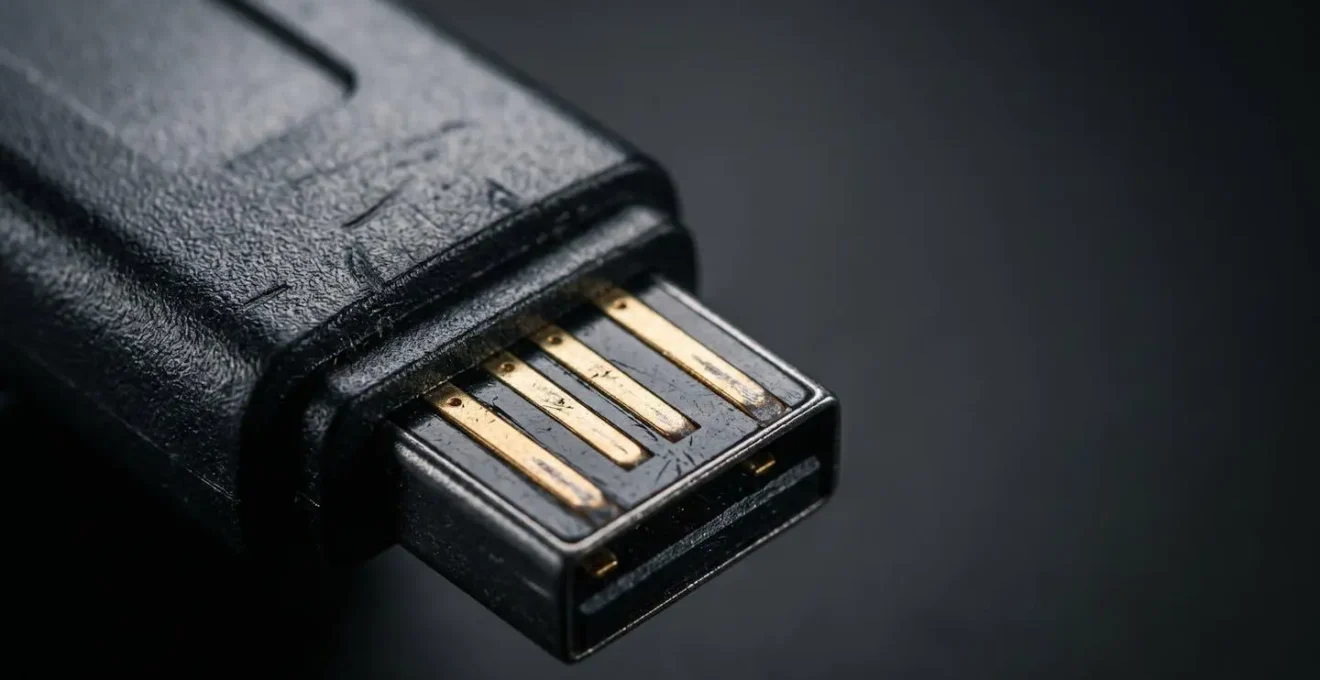
The process involves buying a new, up-to-date model, and using your physical seed phrase backup to restore your wallet onto the new device. This simple act refreshes your hardware security to the current standard. Think of it as replacing the locks on your house; it’s a fundamental part of long-term maintenance.
The Network Selection Error That Sends Your Crypto Into a Permanent Void
One of the most terrifying and irreversible user errors in crypto has nothing to do with hacking. It’s the simple act of sending funds to the correct wallet address but on the wrong blockchain network. Sending USDT from an exchange via the TRC-20 (Tron) network to an Ethereum (ERC-20) address in your hardware wallet, for example, will result in the funds being sent into a digital abyss. In most cases, they are permanently and irretrievably lost.
This error is common because many assets, like the stablecoin USDT, exist on multiple blockchains. Exchanges will often default to the cheapest or fastest network for withdrawals, which may not be the one your hardware wallet is set up to receive. The address format can sometimes be identical across different networks (like ETH and BSC), creating a perfect trap for the inattentive user. You confirm the address is correct, character-for-character, but you fail to verify the network. The transaction is confirmed on the blockchain, but the funds never appear in your wallet.
There is no « undo » button in crypto. There is no customer service line to call. You are solely responsible for verifying both the address and the network for every single transaction. To mitigate this catastrophic risk, you must adopt a disciplined, non-negotiable protocol for every new withdrawal address.
The Test Transaction Protocol is your only safeguard. It is a simple, methodical process that must be followed without exception:
- For any new address, ALWAYS send the network’s minimum possible transaction amount first before transferring larger sums.
- Wait for 3-6 block confirmations on the network before proceeding – do not rush this verification period.
- Only after visual confirmation of the test funds appearing in the destination wallet should you proceed.
- Verify the exact receiving address matches character-by-character on both the sending and destination interfaces again.
- Send the full amount only after all previous steps are completed successfully and verified multiple times.
This five-minute procedure can save you from a lifetime of regret. The small network fee for the test transaction is the cheapest insurance policy you will ever buy.
When Exactly Should You Establish a Formal Trust to Lock Away Your Family Assets?
As your crypto portfolio grows, your security concerns evolve from simple theft prevention to complex estate planning. How do you ensure your assets can be passed to your family or beneficiaries if you become incapacitated or pass away? While technical solutions like multisig wallets exist, for substantial holdings, a legally recognized structure becomes paramount. A formal trust is the gold standard for this purpose.
But at what point does the cost and complexity of setting up a legal trust become necessary? While there’s no single magic number, institutional custody guidelines suggest you should seriously consider a formal trust when your crypto holdings exceed $250,000 or represent more than 25% of your total net worth. Below this threshold, the legal fees might be disproportionate to the assets being protected. Above it, the risk of your family being unable to access your wealth due to technical barriers or legal disputes becomes too great to ignore.
A trust provides a legally enforceable framework that technical solutions lack. A trustee (which can be a person, a law firm, or a corporate entity) is legally obligated to manage and distribute the assets according to the rules you define. This structure survives your absence and can navigate the complexities of transferring digital assets in a way a grieving family member with a cryptic seed phrase cannot. It separates the legal right to the assets from the technical means of accessing them.
While technically robust, solutions like Multisig or Shamir’s Secret Sharing (SSS) have no legal standing and can create complex coordination challenges for heirs. A formal trust, by contrast, is designed for exactly this scenario.
| Solution | Legal Enforceability | Cost | Technical Complexity | Operational Security | Resilience Against Loss |
|---|---|---|---|---|---|
| Formal Trust | High – Legally binding with court enforcement available | High – Requires attorney fees, setup costs, annual maintenance | Low – Minimal technical knowledge required | Medium – Depends on trustee selection and oversight | High – Legal structure survives individual failure |
| Multisig Wallet | Low – No legal framework, purely technical | Low – Transaction fees only, no legal costs | High – Requires understanding of multisig schemes and coordination | High – Distributed control across multiple key holders | Very High – System continues if threshold keys remain (e.g., 3-of-5) |
| Shamir’s Secret Sharing (SSS) | None – Pure mathematical scheme with no legal standing | Very Low – No ongoing costs | Very High – Requires careful implementation and shard management | Very High – Single shard reveals nothing about the key | Very High – Wallet recoverable with threshold shares (e.g., 3-of-5) |
For the serious long-term holder, the question is not *if* you need an estate plan for your crypto, but *when*. Once your portfolio becomes a meaningful part of your family’s future wealth, engaging with legal professionals to establish a trust is no longer an option—it is a responsibility.
Key Takeaways
- Centralised exchanges are not safes; they are liabilities. True ownership only comes with self-custody.
- Your seed phrase is your entire portfolio. If it ever exists in a digital format (photo, text file, cloud), your funds are already lost.
- Security is not a one-time product you buy; it is a continuous operational process (OpSec) of identifying and mitigating attack vectors.
How to Protect Your Physical Crypto Seed Phrases From Fire, Floods, and Theft?
Once you have secured your seed phrase from all digital threats, the final frontier is protecting its physical form from real-world disasters. A phrase written on paper is vulnerable to fire, water damage, and simple degradation over time. To achieve true permanence, you must upgrade from paper to metal. Steel and titanium backup plates are designed to withstand extreme conditions that would destroy paper in an instant.
When choosing a metal backup, the method of recording matters. You should always opt for stamping your words into the metal rather than etching or engraving. As a technical analysis of cold storage durability notes:
Stamping physically displaces the metal, creating deeper, more resilient marks that better withstand extreme heat and corrosion compared to superficial etching or engraving.
– Cold Storage Technical Analysis, Metal Backup Durability Testing
However, even a single, indestructible metal plate creates a single point of failure. If it’s stolen from your home safe, or if your entire home is destroyed in a targeted disaster, you still lose everything. The ultimate solution is physical and geographic redundancy. This is achieved by using a scheme like Shamir’s Secret Sharing (SSS), which is available on wallets like the Trezor Model T. SSS allows you to split your seed phrase into multiple unique « shards. » For example, in a « 3-of-5 » setup, you create 5 shards, and any 3 of them can be used to recover your wallet. No single shard is useful on its own.
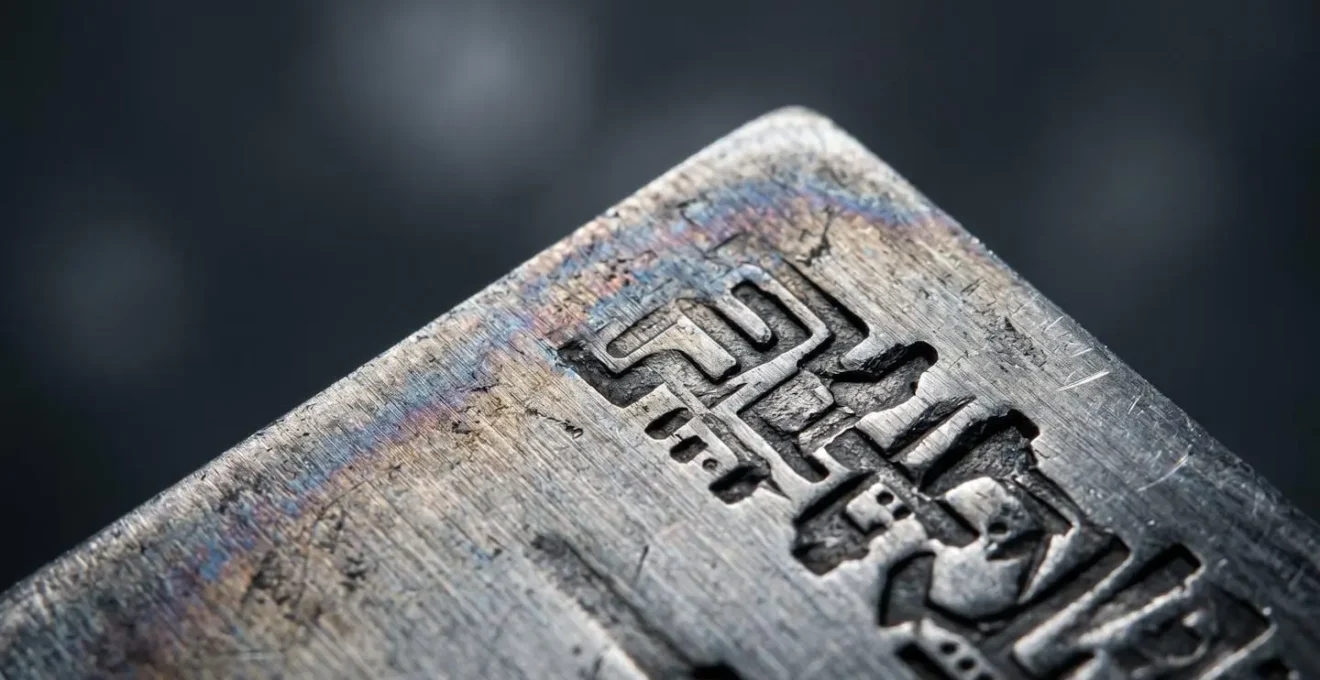
This enables a robust geographic redundancy strategy, where you can store each metal shard in a different, secure location, making it virtually impossible for a single event to compromise your access.
- Split Strategy: Use Shamir’s Secret Sharing to split your seed phrase into multiple shards (e.g., a 3-of-5 scheme).
- Home Safe: Store one shard in a high-quality, fireproof safe in your primary residence.
- Bank Deposit Box: Place a second shard in a bank safety deposit box for institutional-grade physical security against theft and fire.
- Trusted Family Location: Keep a third shard at a trusted family member’s home in a completely different geographic region to protect against localized disasters like floods or earthquakes.
- Secondary Residence: If available, store a fourth shard at a vacation property.
- Professional Custody: For maximum security, consider placing the final shard with an attorney or a professional custody service.
This distributed, multi-layered approach is the endgame of physical seed phrase protection. It ensures that no single point of failure—be it fire, flood, theft, or even memory loss—can ever separate you from your digital assets.
Stop being a potential victim. Start implementing these operational security protocols today to build a true fortress around your digital wealth.